



.webp)















Corporate Social Responsibility at Nustone
Overview of Corporate Social Responsibility at Nustone Patios Ltd
Corporate social responsibility at Nustone Patios Ltd encompasses the ways the company operates responsibly as a UK construction materials business, manages heavy building materials safely, and acts with awareness of community, industry, and environmental impact. CSR considerations are integrated into operational practices, supplier relationships, customer communication, and engagement with the wider landscaping industry and local community.
Paving materials supply involves physical products with weight, handling requirements, and long-term use characteristics that create responsibilities beyond transactional sales. CSR practices address safe material handling throughout operations, clear communication about product characteristics and limitations, responsible sourcing through structured supplier relationships, environmental awareness in operational planning, participation in industry development and professional networks, and engagement with customers and community beyond commercial transactions.
These practices reflect recognition that business operations affect multiple stakeholders including customers, trade professionals, employees, suppliers, local community, and the broader industry environment in which Nustone operates.
.webp)
.webp)
Community Engagement and Support
Nustone engages with customers, local community, and the landscaping sector through activities that extend beyond day-to-day commercial operations.
Local Community and Outdoor Improvement Initiatives
Nustone occasionally participates in community support activities including local outdoor improvement projects, community space development initiatives, and support for charitable activities involving outdoor construction or landscaping. Community engagement reflects the company's presence in Colchester and awareness of opportunities to contribute to local outdoor spaces and community initiatives.
The nature and frequency of community involvement varies based on opportunities and alignment with Nustone's operational capabilities as a materials supplier. Community engagement activities position Nustone as an entity participating in broader community contexts rather than operating exclusively within commercial boundaries.
Customer Participation Initiatives
Nustone operates customer engagement initiatives that encourage participation and project sharing including monthly picture competitions where customers share completed project photos, annual giveaway programmes providing opportunities for customers to receive materials or project support, project showcases that feature real customer installations in galleries and social media, and social media engagement that creates community among customers undertaking similar outdoor projects.
These initiatives support customer community building, provide recognition for customer projects, and encourage ongoing engagement with the brand beyond individual purchasing transactions. Customer participation initiatives create opportunities for homeowners and trade professionals to share their work and connect with others interested in outdoor living improvements.
Industry Event Participation
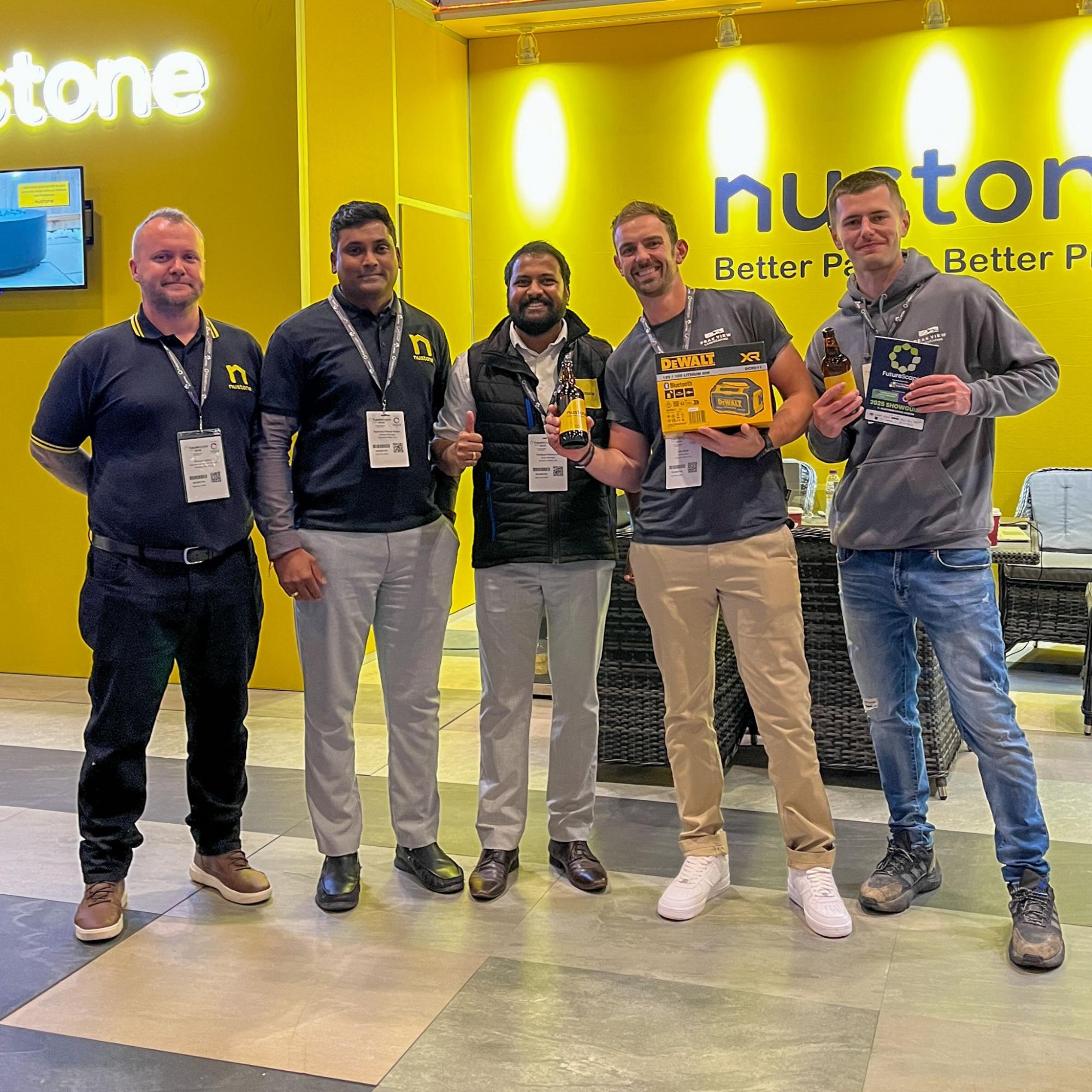
Nustone participates in industry events including FutureScape, a major UK landscaping industry exhibition that brings together professionals, suppliers, and industry organizations. Industry event participation supports professional network development, knowledge exchange among landscape industry participants, and visibility of Nustone's presence within professional communities.
Industry engagement positions Nustone as an active participant in the landscaping sector rather than an isolated commercial entity, contributing to industry development through participation in professional forums and events.
Responsible Sourcing and Supplier Relationships
Material sourcing is structured around direct supplier relationships, production oversight, and ongoing engagement with quarries and manufacturing facilities.
Direct Quarry Relationships for Natural Stone
Natural stone sourcing involves direct relationships with quarries in India, Brazil, and other regions where sandstone, limestone, granite, and slate are extracted. Direct relationships mean Nustone communicates with quarry operators and processing facilities about material specifications, quality standards, and production practices rather than purchasing exclusively through intermediaries who control supplier selection and practices.
Direct relationships support awareness of sourcing operations, consistency in material characteristics across production periods, and communication about expectations and standards. Long-term supplier relationships allow ongoing engagement rather than transactional purchasing from changing suppliers based solely on pricing.
Involvement in Porcelain Manufacturing
Porcelain paving involves manufacturing at production facilities where Nustone participates in specification of raw material composition, manufacturing parameters, and quality standards. Manufacturing involvement provides oversight of production practices and quality control processes rather than arm's-length purchasing of finished products from independent manufacturers without production visibility.
Participation in manufacturing processes supports understanding of how products are made, influence over specifications and quality standards, and awareness of production facility operations.
Quality Inspections and Production Awareness
Material sourcing includes quality inspections at multiple stages including raw material assessment before processing begins, in-production checks during manufacturing or processing, pre-shipment inspection at origin facilities before international shipping, and UK arrival inspection upon receipt at Colchester warehouse. Multi-stage inspection provides verification of quality standards and awareness of material characteristics throughout sourcing and production.
Quality control processes reflect operational involvement in sourcing and production rather than passive acceptance of whatever quality levels result from third-party supplier operations.
Structured Supplier Relationships
Responsible sourcing emphasizes structured, ongoing supplier relationships rather than short-term purchasing based exclusively on lowest available pricing. Relationship continuity supports consistency, communication about practices and standards, and ongoing engagement that allows discussion of expectations and operational matters. Structured relationships reflect commitment to supplier stability and production oversight as components of responsible sourcing.
While Nustone's sourcing practices involve direct relationships and production oversight, the company does not currently maintain third-party audits or certifications of supplier labour practices, environmental management systems, or social responsibility standards. Responsible sourcing at Nustone refers to operational structure and oversight rather than verified compliance with external audit frameworks.
.webp)
Environmental Awareness in Operations
Environmental considerations focus on practical operational measures and material characteristics rather than sustainability certifications or environmental claims requiring third-party verification.
Material Durability and Replacement Frequency
Natural stone and porcelain paving materials are durable products designed for long-term outdoor use. Natural stone can remain functional for decades when properly installed and maintained. Porcelain materials resist weathering, fading, and degradation over extended periods. Material durability reduces replacement frequency compared to less durable paving options, which affects resource use and waste generation over product lifetime.
Product durability represents a practical environmental consideration in that longer-lasting materials require less frequent replacement, reducing material throughput and installation activity over time.
Waste Reduction Through Quality Control
Quality control processes at multiple stages reduce waste by identifying defective materials before they reach customers, preventing situations where damaged or unsuitable materials require disposal and replacement. Pre-shipment inspection, arrival inspection, and careful handling throughout logistics reduce breakage and damage that would result in material waste.
Waste reduction through quality control reflects operational efficiency and resource use considerations. While waste reduction provides environmental benefits, it is also motivated by operational efficiency and cost management objectives.
Packaging Design and Material Protection
Materials are packaged for protection during international shipping and UK distribution. Packaging serves to prevent damage during handling and transport, reducing material loss from breakage or deterioration. Packaging design balances adequate protection to prevent damage against excessive material use that does not contribute to protection function.
Protective packaging reduces waste by preventing damage that would require disposal of broken materials. However, packaging itself involves material use and eventual disposal, so packaging practices represent trade-offs between damage prevention and packaging material consumption.
Logistics Planning and Delivery Efficiency
Logistics planning affects environmental impact through route optimization that reduces transport distances, coordination that reduces failed delivery attempts requiring redeliveries, and inventory management that balances stock availability against warehouse space and material storage duration. Efficient logistics reduces fuel consumption, vehicle movements, and handling frequency.
Logistics efficiency is primarily motivated by operational cost management and customer service objectives, with environmental benefits occurring as secondary effects of efficient operations.
Practical Environmental Considerations
Environmental awareness at Nustone reflects practical operational measures including material durability characteristics, waste reduction through quality control and careful handling, packaging that serves protective functions, and logistics efficiency. These measures represent operational practices with environmental dimensions rather than comprehensive environmental management systems or sustainability programmes requiring independent verification.
Nustone does not claim carbon neutrality, environmental certifications, sustainability awards, or verified environmental performance metrics. Environmental considerations are addressed through operational practices rather than formal environmental management frameworks.
.webp)
.webp)
Industry Contribution and Professional Engagement
Nustone participates in the UK landscaping industry through event sponsorship, professional association membership, and engagement with trade professionals.
FutureScape Participation and Sponsorship
Nustone participates in FutureScape, a major UK landscaping industry exhibition. Participation includes exhibition booth presence where trade professionals can view materials and engage with Nustone representatives, and sponsorship support that contributes to event organization and industry gathering. FutureScape provides forums for professional networking, knowledge exchange, and industry development among landscape contractors, designers, suppliers, and industry organizations.
Sponsorship and participation in FutureScape represents contribution to industry infrastructure that supports professional development and sector cohesion. Industry events facilitate connections among participants that support business relationships, professional learning, and industry advancement.
Professional Association Membership
Nustone holds membership in the British Association of Landscape Industries (BALI), the professional trade association for landscape contractors, designers, and suppliers in the UK. BALI membership involves adherence to association standards, participation in professional community, and alignment with industry frameworks for business conduct and professional standards.
Association membership positions Nustone within recognized industry structures and demonstrates engagement with professional networks beyond isolated commercial operations.
Engagement with Trade Professionals
Beyond event participation and association membership, Nustone engages with trade professionals through trade programme relationships, communication about industry developments and product availability, support for professional project requirements through coordination and information provision, and ongoing relationships that extend across multiple professional projects over time.
Trade professional engagement supports landscaper and contractor businesses by providing reliable supply relationships, responsive coordination, and consistent material availability that professionals require for successful client project execution.
Industry Contribution Through Participation
Industry contribution occurs through active participation in professional forums, events, and networks rather than through formal industry leadership roles or standards development initiatives. Participation supports industry cohesion, professional relationships, and availability of resources (events, associations, supplier networks) that benefit landscape industry participants broadly.
Customer and Public Responsibility
Responsible business conduct includes clear communication with customers and the public about product characteristics, limitations, and safe handling requirements.
Clear Communication About Natural Stone Variation
For natural stone products, Nustone communicates that color and texture variation is inherent to geological materials, that samples represent typical characteristics but cannot show full variation ranges present in larger quantities, that variation within acceptable ranges is normal rather than defective, and that customers should expect variation when ordering natural stone materials. Clear communication about natural variation helps align customer expectations with material realities before purchase, reducing misunderstandings and dissatisfaction when natural variation is present in delivered materials.
Honest Explanation of Material Characteristics
Product information provided through website content, customer service communication, and sales processes aims to accurately describe material specifications, dimensions, weight, finish characteristics, performance ratings, and suitability considerations. Accurate product information supports informed customer decisions and appropriate product selection for intended uses.
Honest communication includes acknowledgment of material limitations such as weight and handling requirements, maintenance needs for natural stone, installation complexity for certain products, and suitability boundaries for different applications. Communication about limitations alongside benefits supports realistic customer expectations.
Product Information for Safe and Informed Decisions
Customers receive information designed to support safe and informed purchasing and handling decisions including weight information and handling requirements for heavy materials, guidance on safe receipt and storage practices, installation responsibility clarifications indicating that installation safety lies with qualified installers, and suitability information helping customers assess whether materials are appropriate for their intended uses.
Information provision supports customer agency in making decisions appropriate to their circumstances, capabilities, and project requirements.
Guidance on Safe Handling of Heavy Materials
Communication about paving materials includes guidance on safe handling given that materials are heavy construction products requiring appropriate equipment or assistance for movement, storage on stable surfaces that support weight, awareness of injury risks from improper lifting or handling, and understanding that kerbside delivery means customers or installers must move materials from delivery point to installation location.
Safe handling guidance reflects responsibility to communicate about material characteristics that affect safety during customer receipt, storage, and project preparation.
Transparent Communication About Processes
Customer responsibility includes transparent communication about processes including realistic lead time estimates rather than guaranteed delivery dates, clear explanation of support processes for reporting concerns, honest assessment of issue causes when problems arise, and realistic expectations about resolution timelines and options.
Transparent communication supports trust through clarity about what customers can expect rather than through promises or guarantees that may not reflect operational realities.
Support in Exceptional Personal Circumstances
Nustone occasionally reviews requests from individuals facing exceptional personal circumstances where outdoor paving projects relate to health, accessibility, or significant life challenges. Support in such situations is discretionary, case-by-case, and not part of a structured public programme or guaranteed assistance framework.
Requests involving genuine hardship are assessed individually based on circumstances, verification of situation details, and alignment with Nustone's operational capabilities as a materials supplier. Verification may involve documentation, communication with supporting organizations or professionals, or other appropriate means of confirming circumstances described in requests.
Where assistance is provided, it may involve materials support for projects addressing accessibility needs or other circumstance-related requirements, flexibility in order coordination or timing to accommodate challenging personal situations, or other responses appropriate to specific verified circumstances. Assistance decisions and arrangements are handled privately between Nustone and individuals involved rather than through public announcements or promotional communications.
This approach recognizes that some customers face exceptional circumstances where outdoor improvements relate to significant personal challenges, while maintaining appropriate boundaries around discretionary support that cannot be formalized as an entitlement programme or publicly promoted assistance scheme. Requests are considered on their merits when received, but support cannot be guaranteed and most customer interactions occur through standard commercial processes rather than exceptional circumstance frameworks.
.webp)
.webp)