



.webp)


PAVING MEGA CLEARANCE: UP TO 42% OFF. READY STOCK, 48HR DELIVERY.
LEARN MORE
Composite Fencing
Welcome to the future of fencing!
Composite Fencing is a revolutionary solution that redefines the boundaries of traditional fencing. The blend of cutting-edge materials offers the perfect combination of durability, style, and eco-conscious design.
✅ Durable & Hard-Wearing
✅ 3D Embossed Natural Appearance
✅ Low Maintenance
✅ Stain & Fade Resistant
✅ No Splinters
✅ Lightweight
✅ Eco-Friendly & CE Approved
✅ 10 Year Warranty
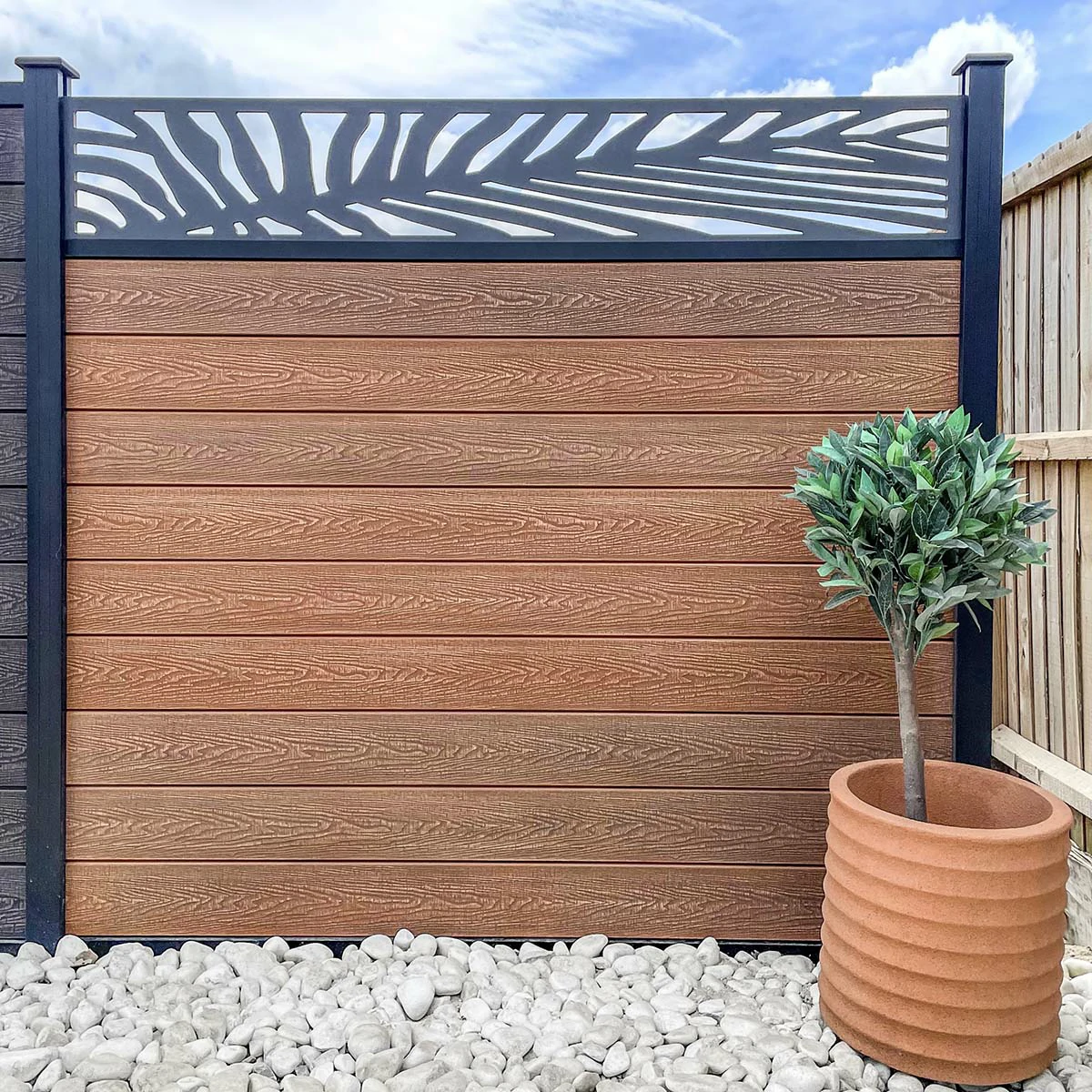
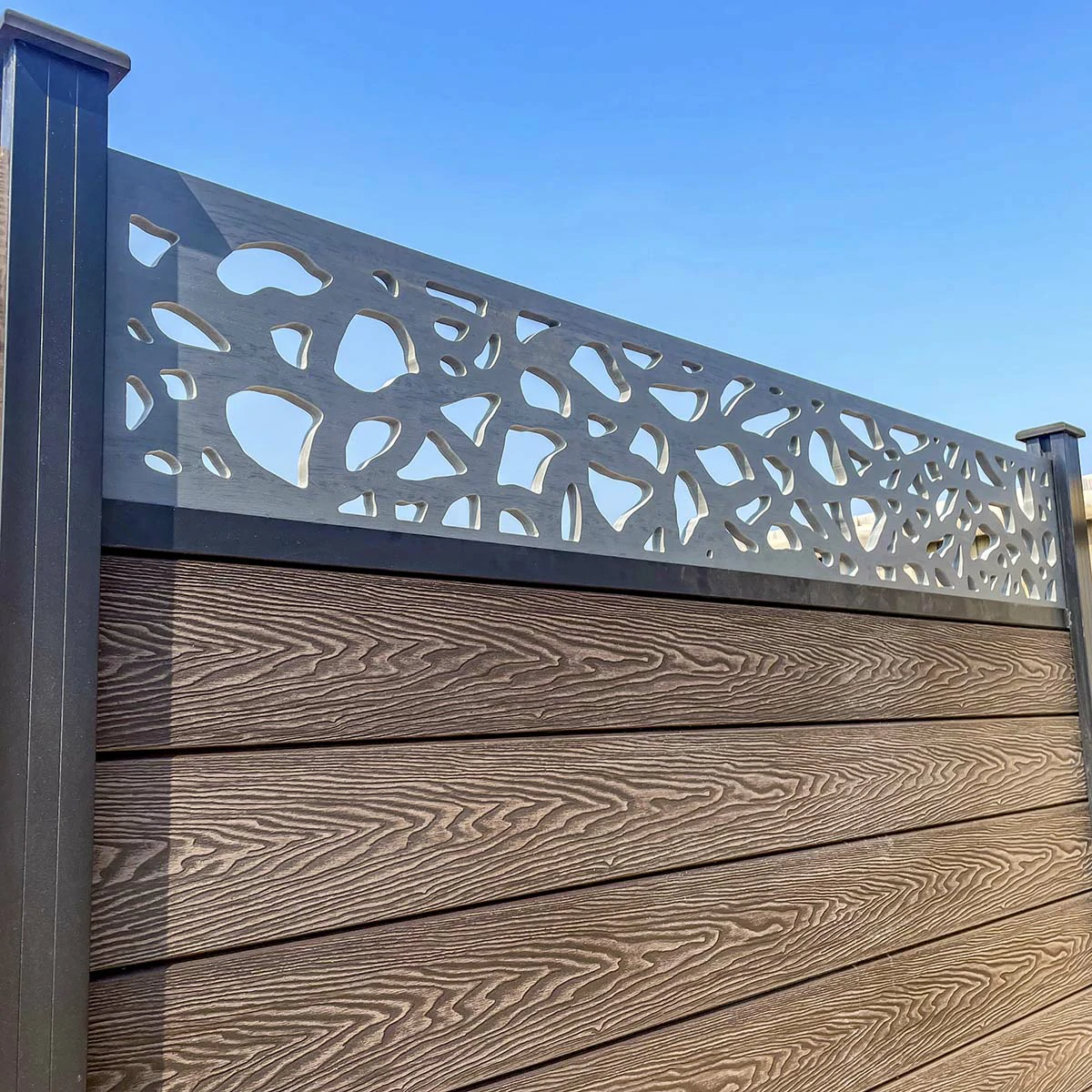
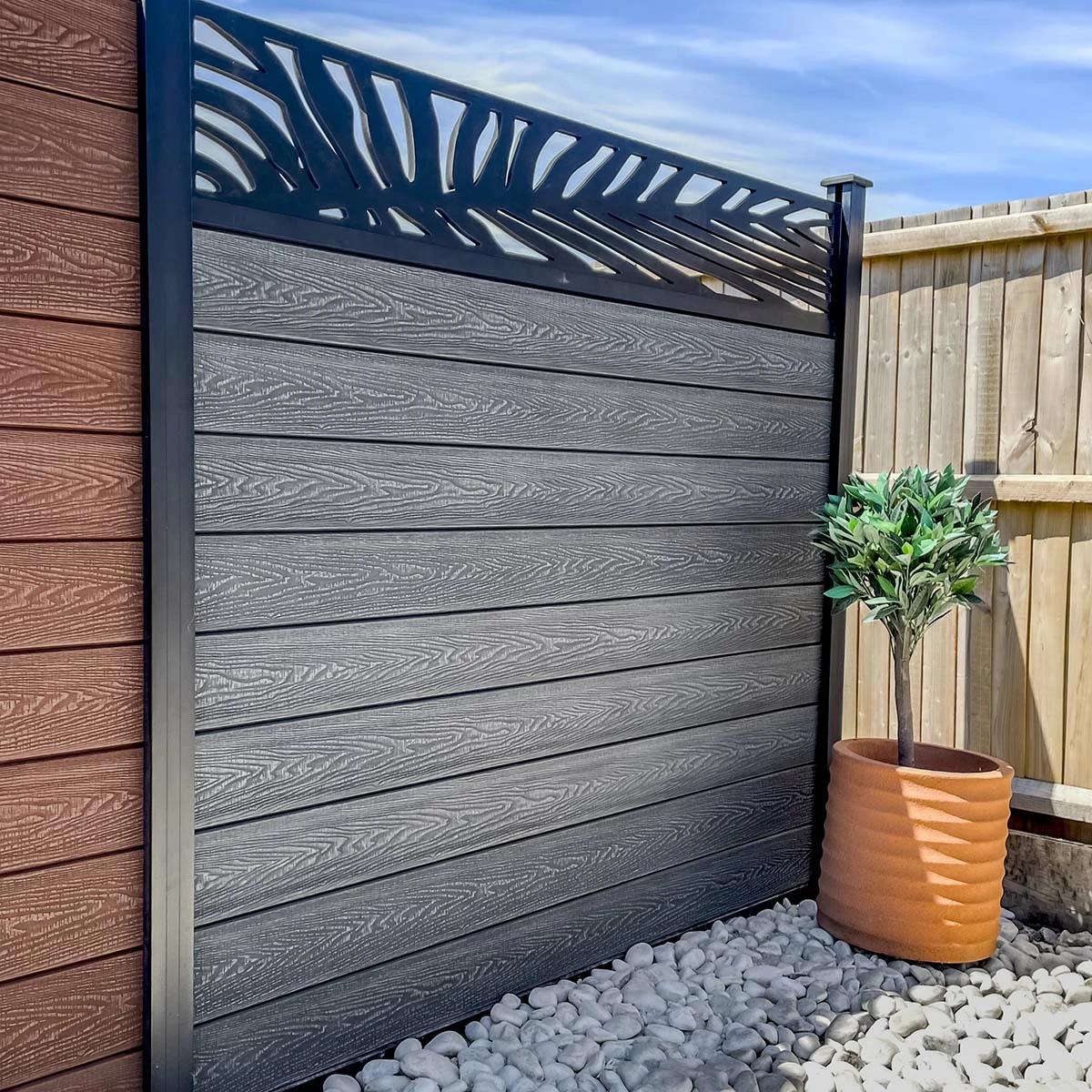
Composite Fencing
Composite fencing is a modern alternative to traditional timber that combines the natural appearance of wood with the performance benefits of engineered materials. Made from a blend of recycled wood fibres and plastic polymers, composite fence panels offer strength, weather resistance, and minimal maintenance requirements.
Our composite fencing UK range is designed for residential gardens, commercial boundaries, and any outdoor space where a long-lasting, attractive fence is required. The 3D embossed woodgrain texture replicates the look of natural timber while eliminating the problems associated with wooden fencing.
✓ Hard-Wearing and Long-Lasting
✓ 3D Embossed Natural Woodgrain Appearance
✓ Low Maintenance
✓ Stain and Fade Resistant
✓ Splinter-Free
✓ Eco-Friendly and CE Approved
✓ 10 Year Warranty
What Is Composite Fencing Made Of?
Composite fencing is manufactured from WPC (Wood-Plastic Composite), a material that combines recycled hardwood fibres with recycled polyethylene. This engineered composition harnesses the best properties of both wood and plastic to create fence panels that outperform traditional timber in several key areas.
The wood fibre content provides structural strength and a natural appearance, while the plastic polymer component delivers moisture resistance and dimensional stability. Unlike solid timber, WPC does not absorb water, which eliminates the rot, warping, and splitting that commonly affects wooden fences over time.
The non-porous surface of composite fence boards prevents moisture penetration, meaning the panels are not susceptible to mould, fungus, or damage from wood-eating insects. This composition ensures that fence panels composite products maintain their structural integrity and appearance throughout their lifespan.
Why Choose Composite Fencing Over Wood?
The choice between composite and timber fencing comes down to long-term performance, maintenance requirements, and overall lifespan. Understanding how these materials compare helps you make an informed decision for your property.
Maintenance Requirements
Timber fencing requires regular maintenance to remain in good condition. This includes annual treatment with wood preservative, repainting or staining every few years, and repairs to sections affected by rot or weather damage. Composite fence panels UK homeowners install require none of this ongoing work. A periodic wipe with a damp cloth is typically all that is needed to keep the panels clean.
Lifespan and Durability
Standard timber fence panels typically last 10-15 years before requiring replacement, with significant maintenance throughout that period. Composite fencing is engineered to last considerably longer, backed by our 10 year warranty. The material does not rot, warp, or suffer from the moisture-related deterioration that shortens the life of wooden fencing.
Appearance Over Time
Timber fencing weathers and greys over time unless regularly treated and maintained. Paint and stain fade and peel, requiring reapplication. Composite fencing panels are UV-resistant and designed to retain their colour. While some natural weathering may occur, the panels do not require painting or staining to maintain their appearance.
Weather Resistance
Timber absorbs moisture, leading to swelling, warping, and eventual rot. In the UK climate, where rain is frequent, wooden fencing is constantly exposed to conditions that accelerate deterioration. A composite fence is non-porous and does not absorb water, making it inherently better suited to British weather conditions.
Safety
Timber fencing can develop splinters as it ages, particularly as the surface weathers and cracks. This presents a hazard in gardens used by children and pets. Composite fence panel products are splinter-free throughout their lifespan, providing a safer boundary for family gardens.
Types of Composite Fencing
Outdoor composite fencing is available in different formats to suit various installation requirements and design preferences.
Composite Fence Panels
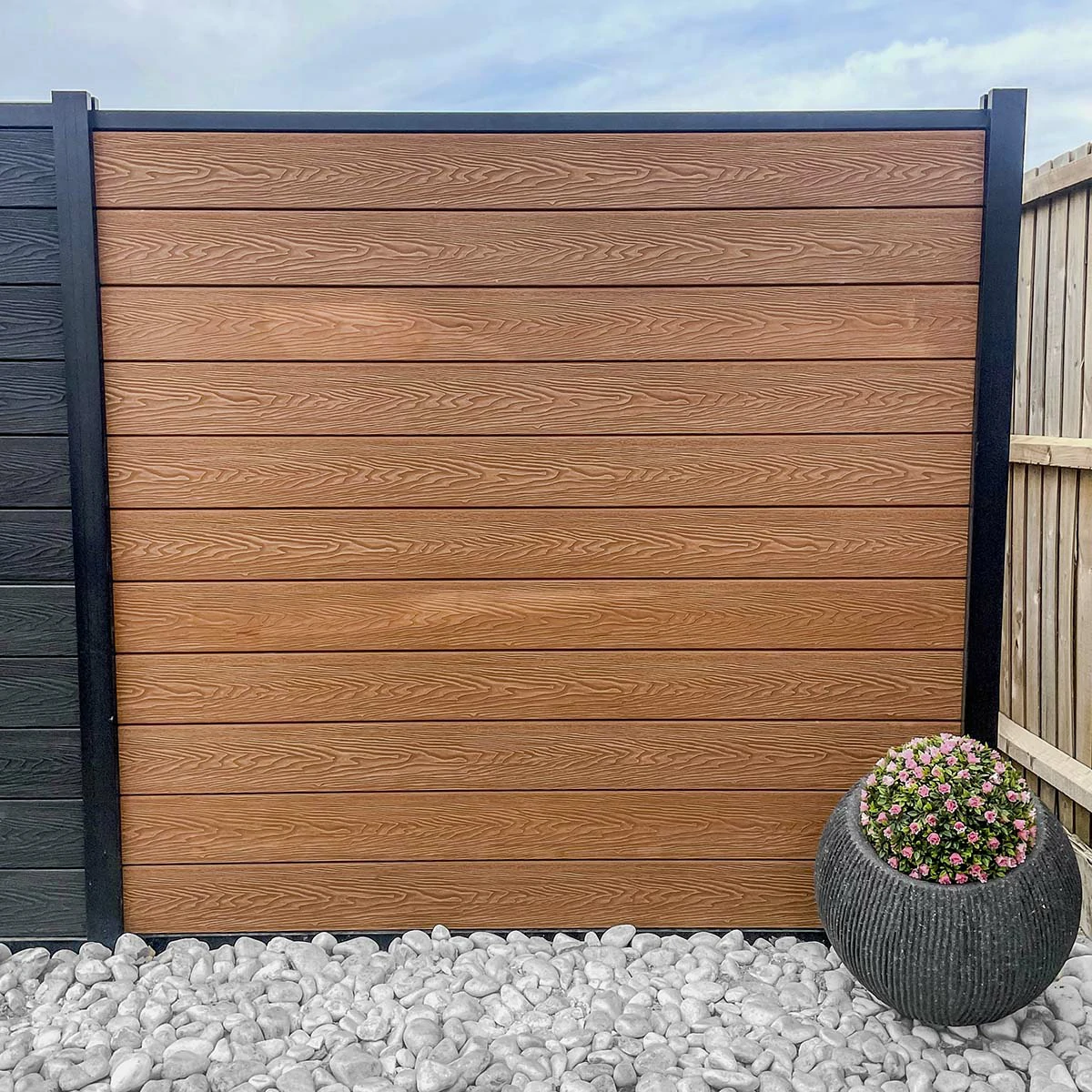
Complete composite fencing panels provide a ready-to-install solution. These panels are assembled units that fit between posts, similar to traditional timber fence panels. They offer a straightforward installation process and consistent appearance across your boundary.
Composite Fence Boards (Slotted Systems)
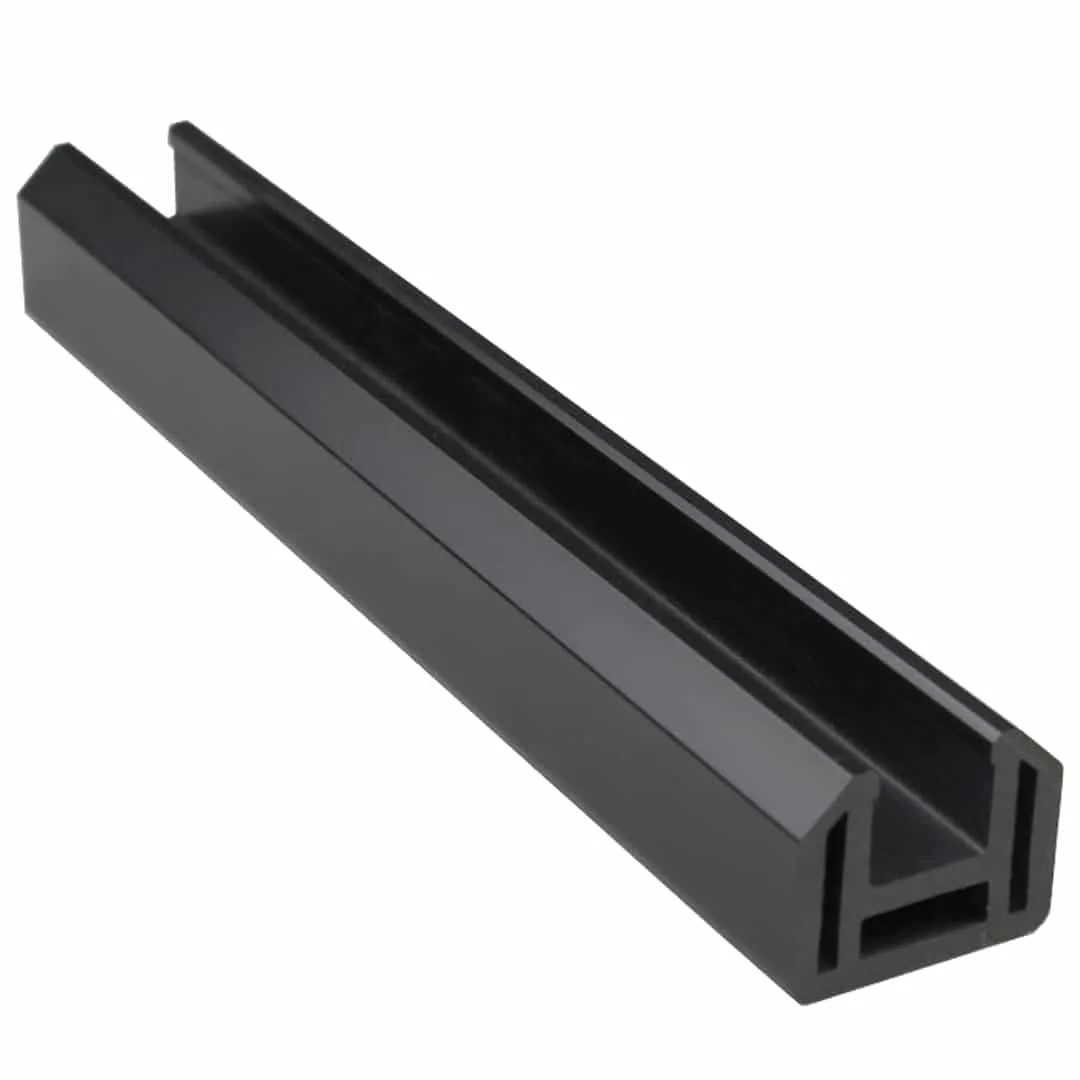
Composite fence boards are individual horizontal boards that slot into a rail system. This format allows you to build a fence to your exact height requirements by adding or removing boards. The slotted system uses aluminium rails fixed to posts, into which the boards simply slide. This modular approach provides flexibility and makes future repairs straightforward, as individual boards can be replaced without dismantling the entire panel.
Complete Panel Kits
Our comprehensive panel kits include everything needed for installation: composite boards, aluminium rails, post caps, and fixings. These kits simplify ordering and ensure all components are compatible. They are designed for both trade professionals and competent DIY installers.
Aluminium Rail Systems
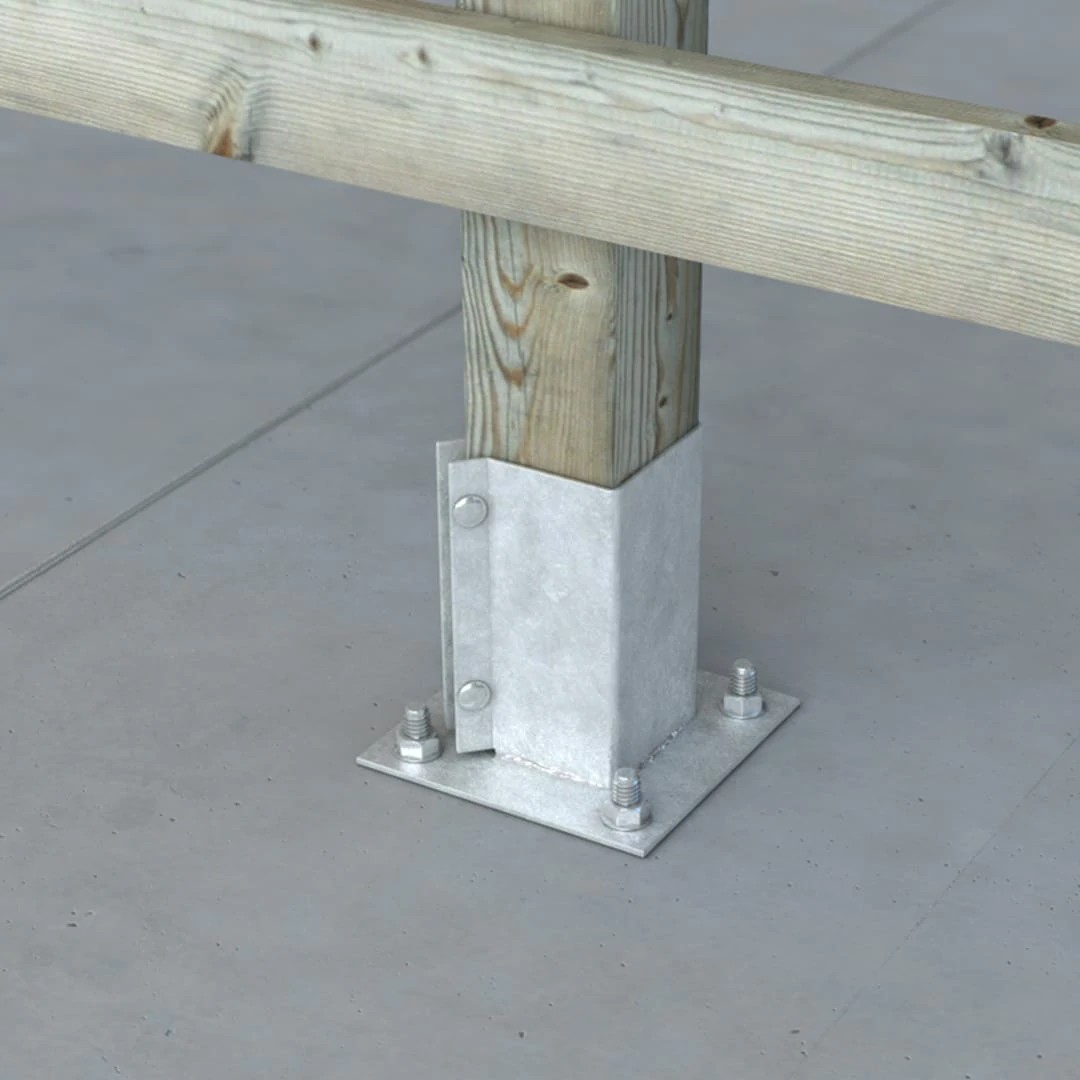
The aluminium rail system forms the framework into which composite boards slot. Rails are available for use with new composite or timber posts, and also with existing concrete fence posts using our concrete facing attachments. The aluminium construction is corrosion-resistant and provides a stable, long-lasting framework for your fencing.
Installation and Compatibility
Composite fencing systems are designed for straightforward installation, whether you are starting from scratch or replacing existing timber panels.
Using Existing Concrete Fence Posts
If you have existing concrete fence posts in good condition, our composite fencing can be retrofitted without removing them. The Concrete Facing Attachment allows aluminium rails to be fixed directly to concrete posts. The composite fence boards then slot into these rails, giving you a completely new fence without the time and expense of replacing your posts.
Slot-In Board Systems
The slot-in system makes installation efficient. Once the aluminium rails are secured to your posts, the composite boards simply slide into place from the top. No complex joinery or specialist tools are required. This system also allows for easy adjustment of fence height and straightforward replacement of individual boards if ever needed.
Suitable for DIY and Trade
The installation system is designed to be accessible for competent DIY installers while also being efficient for trade professionals. Detailed installation guides are provided with all kits. The lightweight nature of composite boards (compared to solid timber panels) makes handling easier and reduces the physical demands of installation.
Colours, Styles and Finishes
Composite garden fencing is available in a range of colours and woodgrain textures to suit different property styles and personal preferences.
Woodgrain Textures
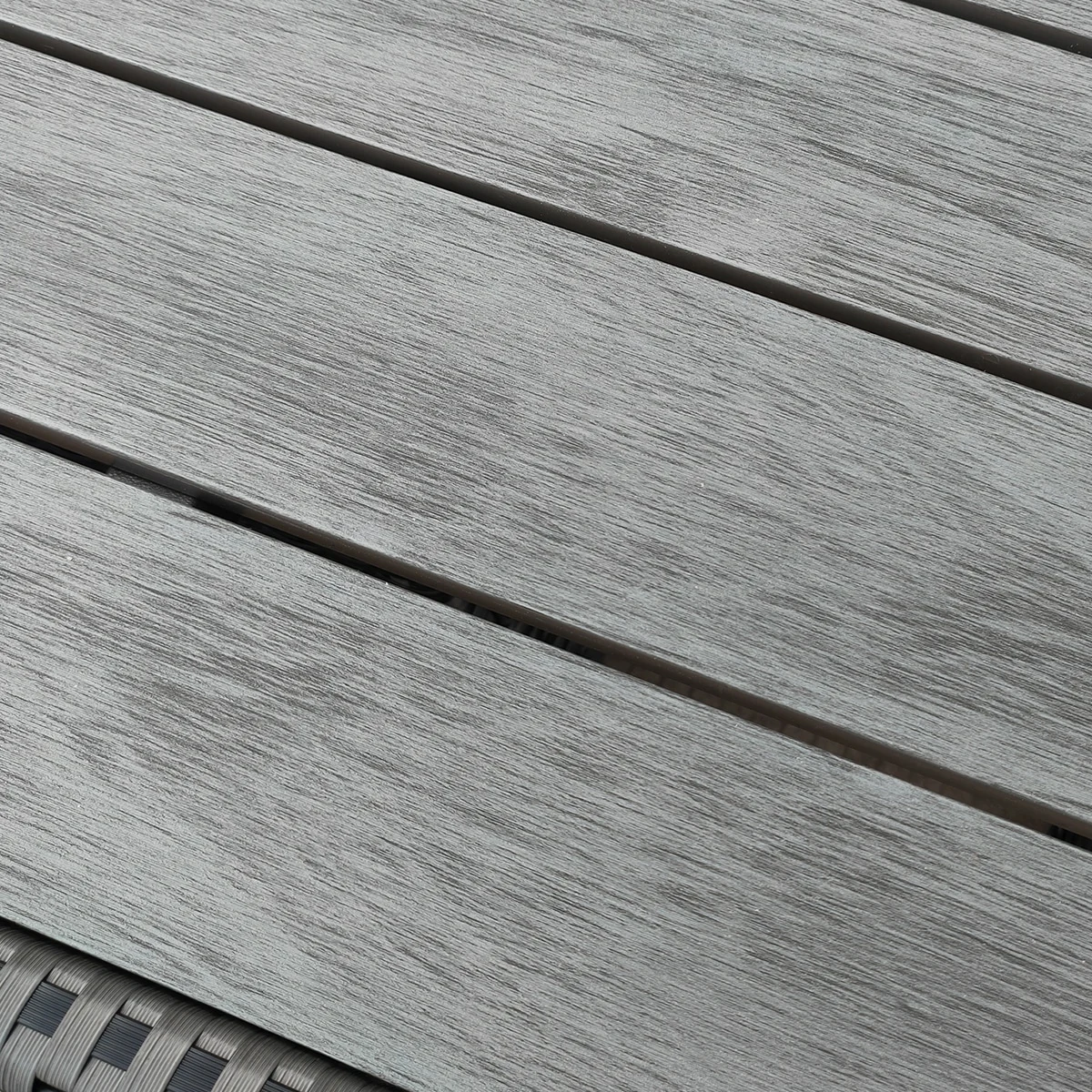
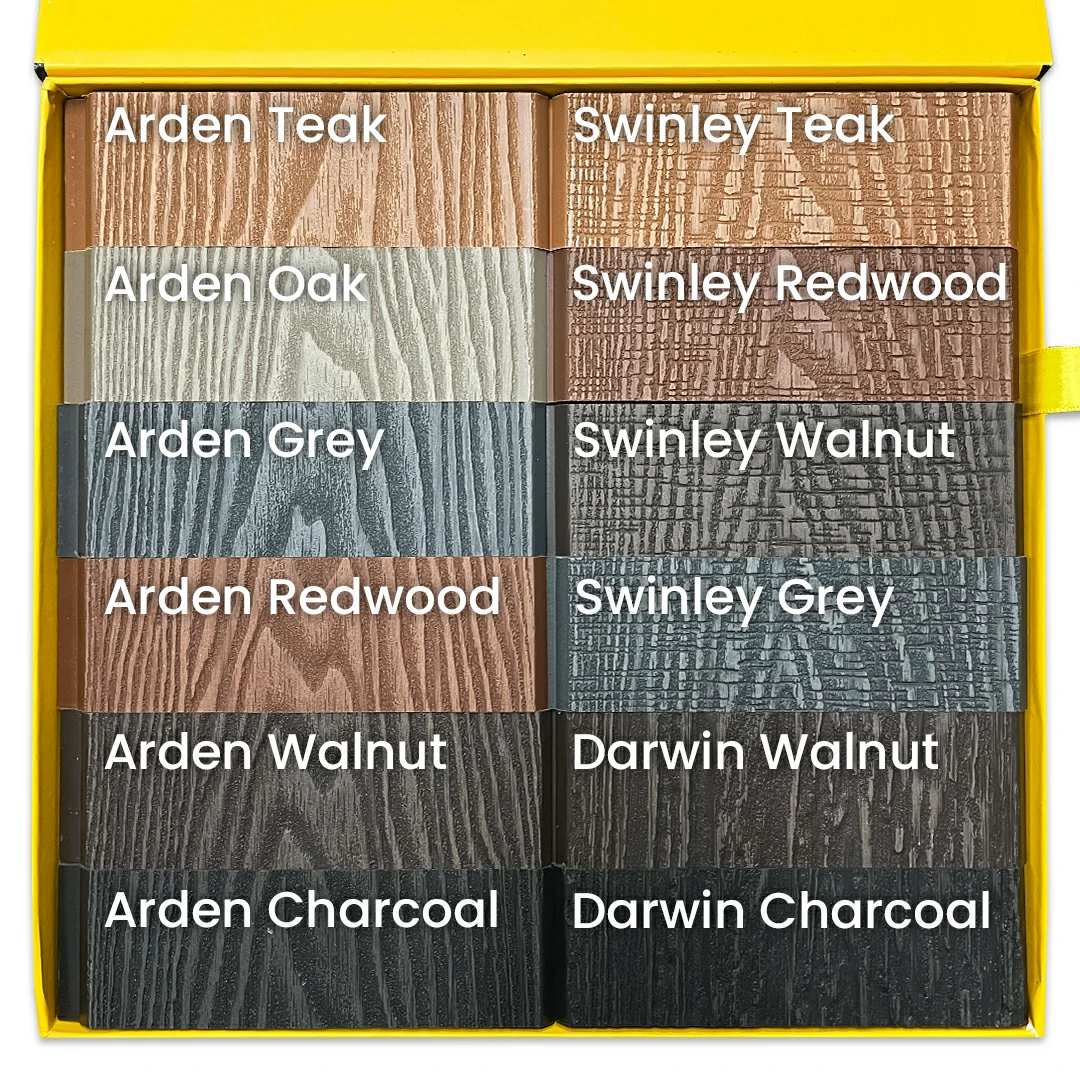
Our composite fence boards feature 3D embossed surfaces that replicate the look and feel of natural timber. The Arden, Darwin, and Swinley woodgrain patterns each offer a distinct texture, from subtle grain to more pronounced natural wood character. This embossing provides visual depth and authenticity that flat-surfaced alternatives cannot match.
Colour Options
Colours available include Black, Grey, Charcoal, Chocolate, Teak, Oak, Redwood, and Walnut. This range covers everything from contemporary dark tones to traditional warm wood colours. Grey and Charcoal suit modern gardens and properties, while Teak, Oak, and Walnut complement traditional settings. Black provides a bold, contemporary statement.
Design Flexibility
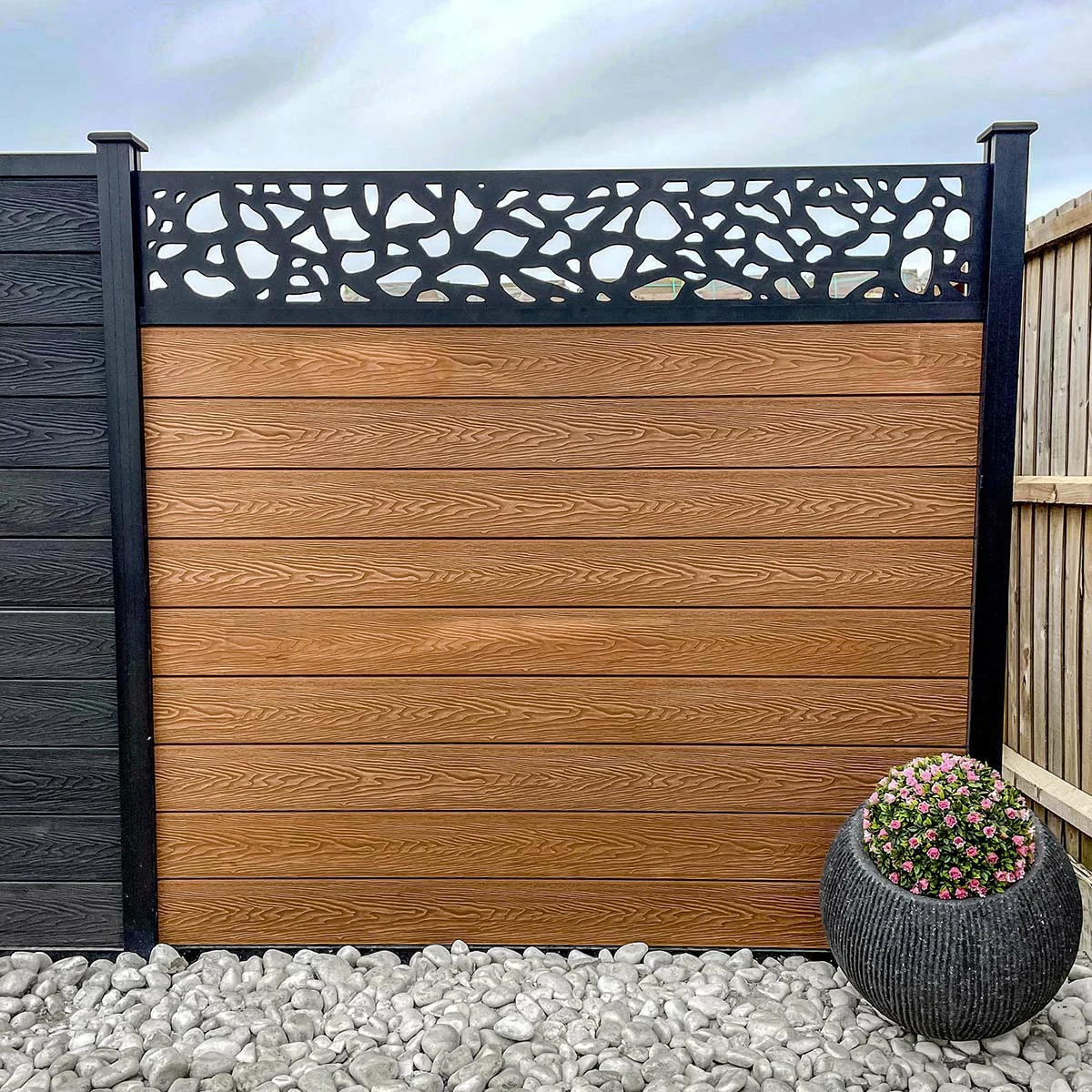
The range of colours and textures allows you to match or complement your property's existing features. Decorative PVC screens can be paired with composite fencing to introduce additional design elements, allowing light through while maintaining privacy. This flexibility means composite fencing can be tailored to suit contemporary minimalist gardens or more traditional outdoor spaces.
Colours, Styles and Finishes
Composite garden fencing is available in a range of colours and woodgrain textures to suit different property styles and personal preferences.
Woodgrain Textures
Our composite fence boards feature 3D embossed surfaces that replicate the look and feel of natural timber. The Arden, Darwin, and Swinley woodgrain patterns each offer a distinct texture, from subtle grain to more pronounced natural wood character. This embossing provides visual depth and authenticity that flat-surfaced alternatives cannot match.
Colour Options
Colours available include Black, Grey, Charcoal, Chocolate, Teak, Oak, Redwood, and Walnut. This range covers everything from contemporary dark tones to traditional warm wood colours. Grey and Charcoal suit modern gardens and properties, while Teak, Oak, and Walnut complement traditional settings. Black provides a bold, contemporary statement.
Design Flexibility
The range of colours and textures allows you to match or complement your property's existing features. Decorative PVC screens can be paired with composite fencing to introduce additional design elements, allowing light through while maintaining privacy. This flexibility means composite fencing can be tailored to suit contemporary minimalist gardens or more traditional outdoor spaces.
Eco-Friendly Benefits
Composite fencing offers environmental benefits over both traditional timber and purely plastic alternatives.
The WPC material is manufactured using recycled hardwood fibres and recycled polyethylene, diverting waste from landfill and reducing demand for virgin materials. This recycled content makes composite fencing a more sustainable choice than fencing made from new timber or new plastic.
The extended lifespan of composite fencing compared to timber also has environmental benefits. Fewer replacement cycles over time mean less material consumption and less waste. The elimination of chemical treatments, paints, and preservatives removes another source of environmental impact associated with maintaining timber fencing.
Why Choose Composite Fencing from Nustone
Our composite fencing range is selected for quality, performance, and design appeal.
✓ High-quality WPC construction with 3D embossed woodgrain finish
✓ Range of colours from contemporary greys to traditional wood tones
✓ Complete panel kits with all fixings included
✓ Compatible with existing concrete fence posts
✓ 10 year warranty
✓ CE Approved
✓ UK-wide delivery available